
Pack-to-pallet coding confidence
Simplifying complexity with a coordinated coding strategy

Why does modern packaging require a unified approach to coding and labeling?
Modern packaging lines move faster and handle more variability than ever—more materials, more SKUs, more regulations, and higher expectations for accuracy. The best coding systems provide safety information, variable data, traceability codes, and product details, yet many operations still rely on fragmented systems across packs, cases, and pallets.
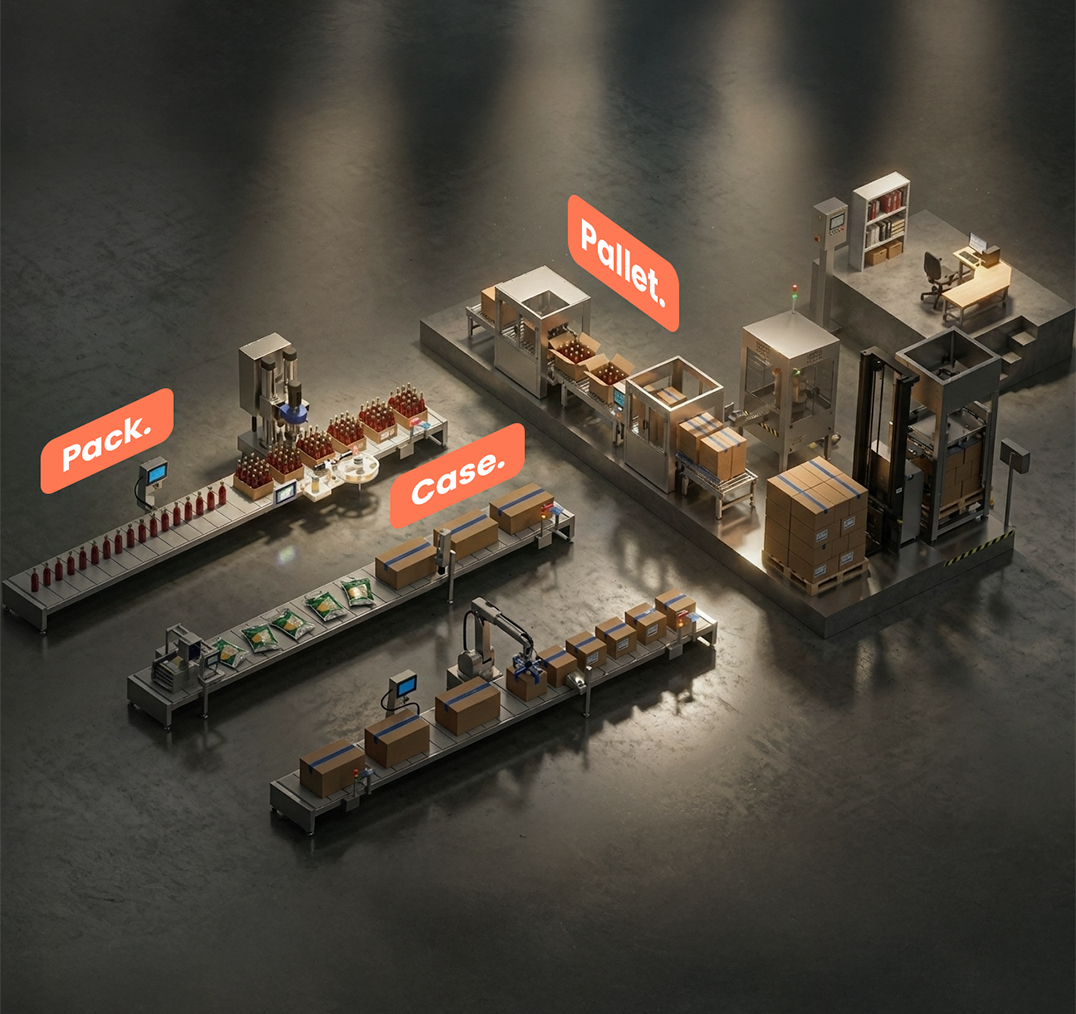
A coordinated coding strategy from Videojet helps simplify the process and enables reliable performance from product to wrapped pallet. This work is strengthened by application specialists who guide packaging teams from early assessment through installation, training, and ongoing optimization. Their involvement helps align technology choices with line conditions, regulatory requirements, and long-term production goals, providing consistent guidance through presales, integration, and post-sales phases.
A unified approach to industrial marking and coding supports product traceability and reduces rework across packs, cases, and pallets.
When every code matters, one accountable partner makes all the difference.
Which printing and marking technologies are best for primary package codes?
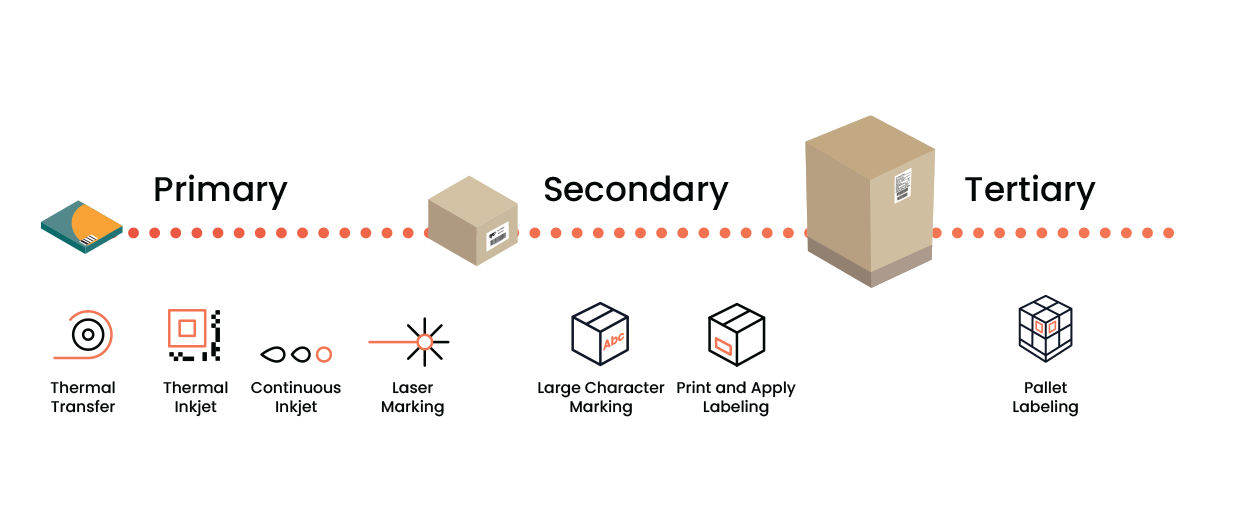
Product package coding applies the first essential marks to cans, bottles, cartons, films, foils, pouches, and trays. These marks carry safety details, expiry dates, product information, and variable data that must remain readable from the moment a package is filled to the moment it’s purchased.
Different substrates and speeds require different technologies:
- CIJ printing (continuous inkjet) for low to ultra‑high speed lines and curved surfaces like cans
- TIJ printing (thermal inkjet) for crisp alphanumeric and 2D codes
- TTO printing (thermal transfer overprinting) for film, foil, and label materials
- Laser marking for permanent, ink‑free, fluids‑free marks
Videojet partners with you to assess substrates, environmental conditions, and automation requirements to help ensure the best primary packaging coding technology is chosen and integrated effectively.
When primary package coding is part of a unified line strategy, it supports clear downstream scanning, helps reduce rework, and strengthens consumer confidence.


Consistency at the pack, case, and pallet levels strengthens every link in the supply chain.
What role do consumables play in maintaining code quality across the line?

Inks, ribbons, and labels sourced from a single partner help streamline procurement, improve traceability, and maintain consistency across multiple lines. Material testing—such as adhesion, contrast, and dry-time evaluation—supports the selection of consumables suited to each substrate and application.
This alignment helps protect code quality and overall performance as materials or packaging formats evolve.

Not sure which coding technology is right for your packaging line?
Our coding experts are ready to assist!
What are the best ways to code cases for warehouse and distribution workflows?
Case-level marks carry batch data, handling instructions, safety notes, and product details that guide warehouse systems and operators. These marks must remain readable through vibration, stacking, cold storage, humidity, and long transport distances.
Large character inkjet for direct case printing, along with print and apply labeling, provides the durability and clarity needed for logistics workflows.
When aligned with the coding applied to product packages and pallets, case coding helps prevent scanning delays, reduce labeling errors, and support efficient routing. Videojet expertise in both inkjet case printing and automated labeling helps manufacturers maintain accuracy across changing case materials and packaging conditions.
When systems work together, lines operate
with fewer interruptions.
Why is pallet labeling critical for supply chain flow and shipment accuracy?
Pallet labels consolidate product information, order data, and other identifiers that logistics networks depend on for accurate receiving and inventory matching. Errors at this stage slow distribution or require rework.
Videojet pallet labelers apply consistent, readable labels to wrapped pallets, helping maintain correct placement and orientation. Automated pallet labeling reduces the variability of manual workflows while supporting smoother movement through warehouses and customer facilities.
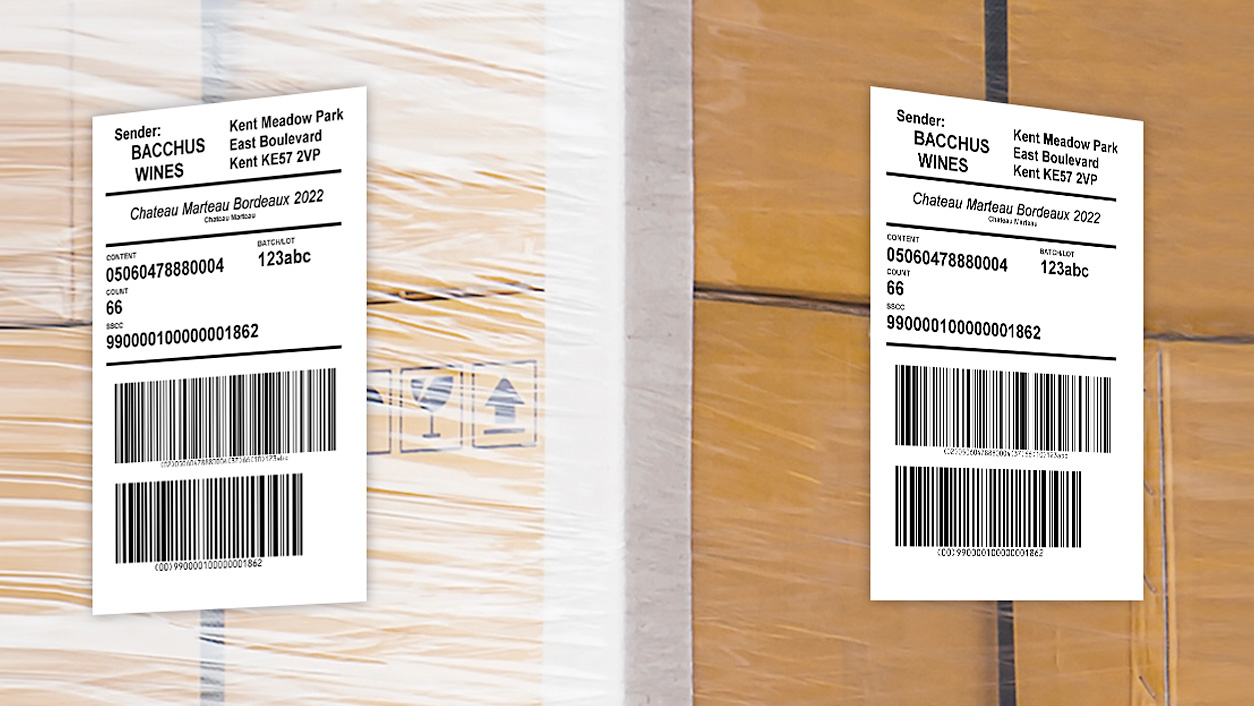
When integrated with the Videojet approach to pack and case coding, the best pallet labeling solution helps create a unified identification process that reduces downstream errors and enables stronger supply chain reliability. This alignment strengthens product traceability and helps ensure accurate routing through the supply chain.
How does strong service support long-term coding performance?

A global service network, delivered locally, provides installation, maintenance, troubleshooting, and remote diagnostics to help maintain consistent performance across facilities.
Standardized processes and technical expertise support faster issue resolution and stable operation over the life of the equipment. This service structure helps manufacturers maintain reliability and reduce avoidable downtime.
FAQs
Working with Videojet typically starts with an assessment of materials, line speeds, data requirements, and regulatory needs across primary, case, and pallet operations. This helps identify where coding requirements overlap and where inconsistencies or risks may exist.
Videojet then supports system selection and integration planning, coordinating with plant teams, OEMs, or integrators as needed. Installation focuses on minimizing disruption while ensuring equipment and software operate as intended.
Ongoing support includes application assistance, service coverage, and access to technical expertise to help maintain code quality, uptime, and consistency as production requirements change.
A coordinated pack‑to‑pallet coding strategy links the marks applied at the primary, case, and wrapped pallet stages into a single, aligned approach, even when production environments include multiple coding technologies, suppliers, and legacy systems. Rather than operating as isolated points, packaging levels share consistent data structures, code formats, and quality requirements across the packaging and distribution workflow.
This alignment helps reduce rework, improve scan reliability, and simplify fault isolation when issues occur. Software and connectivity capabilities can support the management of variable data, enforce coding rules, and maintain consistency across lines and sites, while allowing existing equipment to remain in place within a mixed or evolving production environment.
In many organizations, responsibility for primary packaging, secondary packaging, and pallet operations is split across different teams or functions. A coordinated pack‑to‑pallet strategy supports alignment without requiring a single owner for the entire line.
Shared data standards, consistent coding rules, and compatible systems help ensure information remains accurate across packaging levels, regardless of who manages each stage. This can reduce hand‑offs, simplify troubleshooting, and support reliable identification and traceability.
Using one provider helps reduce mismatched equipment, inconsistent interfaces, and manual workarounds. A single source of coding expertise, like Videojet, helps align decisions across packaging levels, standardize technology choices, and support long-term accuracy. This approach helps to maintain readability, reduce downtime, and improve the flow of safety and product information through manufacturing and distribution.
A coordinated coding strategy may include continuous inkjet (CIJ) for low to ultra‑high‑speed lines, thermal inkjet (TIJ) for crisp codes, thermal transfer overprinting (TTO) for films, foils, and labels, laser marking for permanent, ink-free, fluids‑free marks, and large character inkjet or print and apply labeling for case and pallet identification. Videojet helps determine which combination best fits specific materials, speeds, and environmental conditions.
Integrated coding helps ensure that every unit in the packaging hierarchy displays accurate information that’s required for safe handling, correct routing, and reliable product verification. When primary package marks, case-level data, and wrapped pallet labels align, it reduces the risk of misidentification, supports consistent scanning, and strengthens consumer confidence in product quality and reliability.
Videojet provides a coordinated set of coding and labeling solutions designed to work across a wide range of packaging materials—metal cans, plastic bottles, cartons, films, foils, corrugate, and wrapped pallets. Through application expertise, integration support, and a global service network, Videojet helps manufacturers apply accurate marks, maintain uptime, and improve traceability throughout their production and supply chain processes.


